
Financial tools & resources.
Run the numbers, find a clear explanation, or explore a new topic. Choose a resource below to get started.
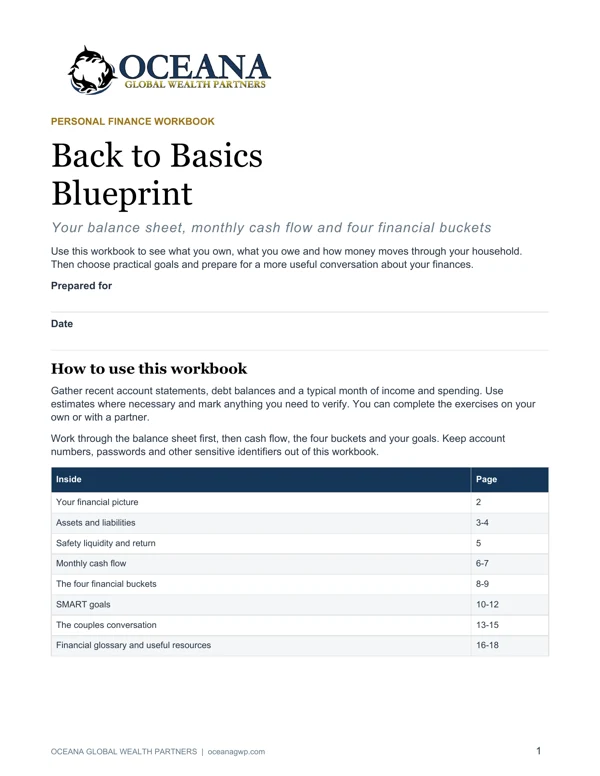
Start with the bigger picture.
Get a clearer picture of what you own, what you owe and how money moves each month. Oceana’s Back to Basics workbook brings your goals, cash flow and next steps together.
18 pages · PDF · Complete at your own pace or bring it to a conversation with our team.
What would you like to explore?
Choose a tool or a topic. Go at your own pace.
Mortgage calculators
Explore payments, affordability and home financing scenarios.
Open calculators
Articles
Plain-language writing on debt, estate planning, wealth and business.
Browse articles
Financial terms
Find clear definitions and sources for frequently used financial terms.
Open the glossary
Educational videos
Explore Oceana’s videos, one topic at a time.
Watch on YouTube (opens in a new tab)
Free book
A free guide to understanding your debt and planning your next steps.
Get the free book (opens in a new tab)Not sure where to start? We can help you find the right resource.
Ask the Oceana team →